I have been travelling through Central Queensland this last month, speaking about herbicide resistance levels and the potential of it increasing over time, particularly to the active ingredient glyphosate.
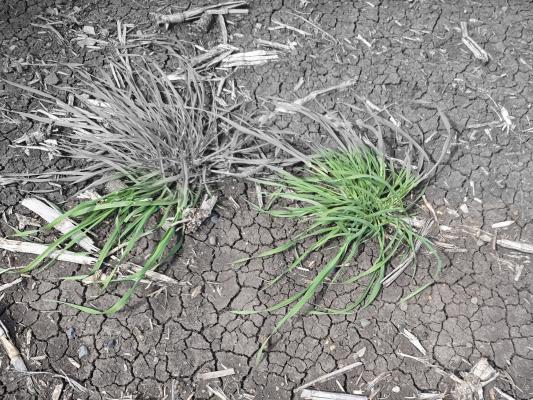
No doubt, we have some tough weeds like Feather Top Rhodes and Fleabane to kill with glyphosate or glyphosate mixtures – and there are others that do not even need the tag of a herbicide resistant species, being so tough in the first place. How much time will elapse until herbicide resistance is upon us even more is probably not the question to ask. The observation should be how much glyphosate herbicide resistance is already upon us that we do not even know about or are even suspicious about.
It is certainly sure that extreme dry weather, such as we have all experienced over the last few years in many regions, does not lead to weed seed germinations – and therefore herbicides or cultivation are not needed for any weed control in those bare dry times. Does that mean that herbicide resistance becomes less of an issue?
Certainly, some weed seeds do not stand the test for that length of dry time when it comes to viability or persistence. For example, Feather Top Rhodes, which has us all concerned with its exploding population in our paddocks and on our roadsides, does not retain germination after about 12 to 15 months, particularly for those seeds remaining on the surface. The curious thing is that the seed burial process to a depth of 10 centimetres via cultivation does not eliminate germination of these grass weeds; this burial action can give weed seeds a longer viable persistence if they are brought to the surface again.
A lot of discussion has been had around the use of strategic tillage events that either kill weeds before they set seed or as a secondary benefit, like having the weed seed be buried deeper under the soil surface. Now, this strategic tillage practice certainly has some detractors, who, like many of us, have fully realised and appreciated the huge benefits of zero till over the years. The zero till farming system has performed exceptionally for well over 35-odd years now, however it has not been without its problems. Initially, herbicide cost per litre was a problem, however as the cost per litre of glyphosate went down, the option of using herbicides to control weeds gained more acceptance – to the extent where our weed spectrum was perhaps being controlled by a single mode of action herbicide like glyphosate between 1990 and 2000. Many of us know that the risk of developing herbicide resistance via the constant repeated applications of a same mode of action product is high. However, many folks in our agricultural scene continue to do just that. There are at least six ways of glyphosate herbicide resistance developing in the common plants we call weeds through our Australian paddocks.
There are plenty of tips and tactics to reduce your potential exposure to developing herbicide resistance, and the cultivation option – used albeit strategically for timing, methodology, depth and equipment – is still so very important. Maybe we will shift in the way we farm to not totally follow zero till practices, and the old phrase ’It does not hurt to dig the garden once’ may return. The key is when and with what machine do you perform this mechanical operation to give some weed herbicide selection relief and therefore continue the sustainability of our herbicides like glyphosate. Certainly, just rushing out with the cultivator is not the only means of controlling these potentially resistant weeds. So, the weed control tool box needs a thorough examination about what you can use and what suits your soil and farming operation timing.
Many other regions of Australia have realised the costly impact of herbicide resistance getting out of control, so the Weedsmart Big 6 Tips and Tactics brochure was born out of the need for diverse tactics. Perhaps we in the northern region need to adopt the same ’can-do diversity’ attitude regarding the burgeoning herbicide resistance on our farms.