Disaster simulation tests first responders
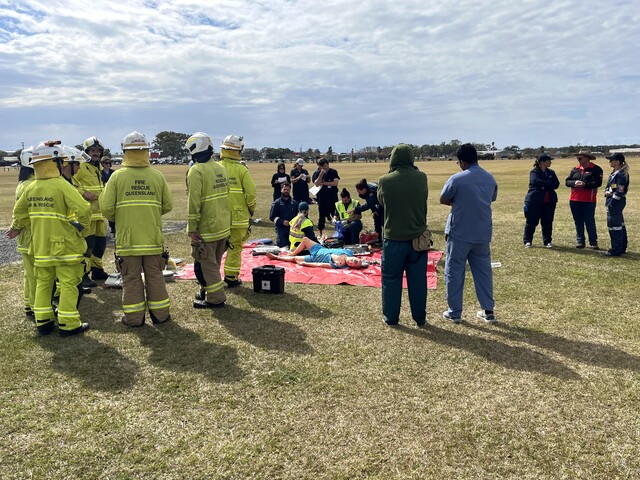
The emergency responders were tasked to respond to a simulated multi-victim car and pedestrian crash. (SUPPLIED)

Wide Bay Burnett’s first responders are ready for their next local disaster after last month’s simulation training.

A selection of emergency services attended the mid-August training session which simulated a multi-victim car and pedestrian crash at the Bundaberg Showgrounds.

The multi-agency exercise, organised by LifeFlight Rescue in conjunction with the Wide Bay Hospital and Health Service, imitated a large-scale disaster with mass injuries and looked to test emergency procedures and response capabilities in a realistic scenario.

Participants included Bundaberg Hospital’s Emergency Department and Critical Care team, Queensland Ambulance Service, Queensland Fire and Emergency Service and Queensland Police Service, University of Queensland and the Royal Flying Doctor Service.

LifeFlight Doctor Yulia Sugeng said in Queensland, responding to a Mass Casualty Incident involves a coordinated effort among multiple agencies, each with distinct roles.

The Queensland Ambulance Service leads the triage, treatment and transport of casualties, prioritizing patients based on the severity of their injuries.

At an incident, Queensland Fire and Emergency Services are responsible for scene safety, including fire suppression, rescue operations, and hazardous materials management.

Queensland Fire and Rescue Service Bundaberg Area Commander Trevor Duncan said the joint exercise provided an excellent opportunity for firefighters to practice casualty management procedures.

“What is important about this exercise from a Fire and Rescue perspective is that it tests those communication lines and the collaboration that we have across the different agencies,” he said.

Meanwhile, Queensland Police Service secures the area during an emergency, managing traffic and crowd control and supporting investigations and communication.

Queensland Police Service Wide Bay Burnett District Officer Superintendent Anne Vogler said the exercise tested plans and the way agencies work together in an emergency to keep communities safe.

“Throughout the exercise, we’ll be focusing on our coordination, communication and readiness for real emergencies,” Superintendent Vogler said.

“Though we’re confident in our current standard of response, these exercises are vital in ensuring we’re continuously improving, both internally and in partnership with each other.”

Finally, Queensland Health provides ongoing medical treatment, coordinates hospital capacity and supports public health responses.

LifeFlight and RFDS play an important role in aeromedical response, however LifeFlight Medical Officers also work alongside QAS Flight Paramedic to provide critical care on local road response.

Additionally, the State Emergency Service offers logistical and operational support when needed in an emergency.

A Wide Bay Hospital and Health Service Emergency Department Nurse spokeswoman said the exercise brought together multiple stakeholders and emergency response agencies including university students.

“This is the largest exercise of this kind to be done in the Wide Bay region over the last decade,” she said.

“It is a great opportunity not just for the professionals to practice together but also demonstrate to the students what their future professional lives could involve.”