New biosecurity program starts soon

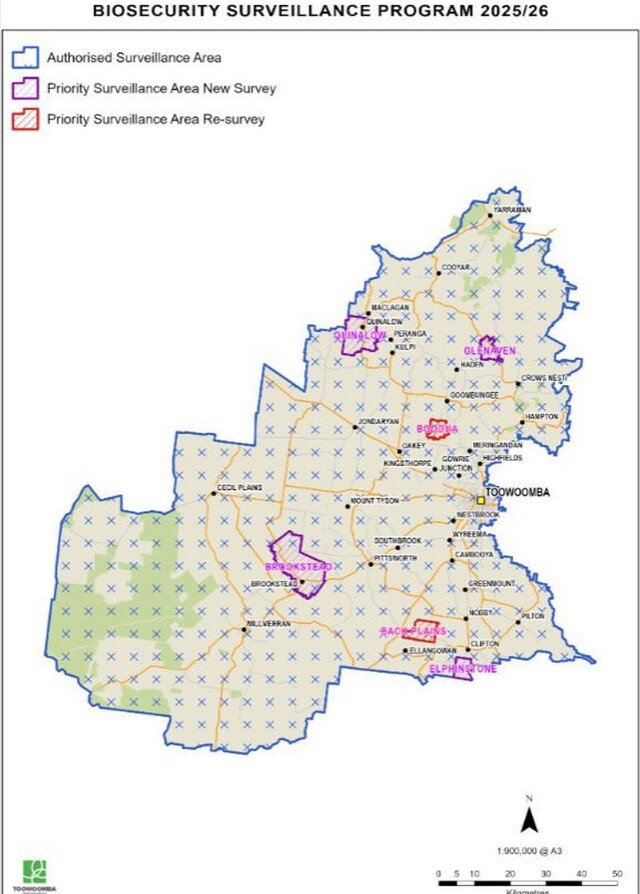
Toowoomba Regional Council's 2025/26 biosecurity surveillance program. Blue is the authorised surveillance area, purple is the priority surveillance area new survey, and pink is the priority surveillance area re-survey. (SUPPLIED)

A new biosecurity surveillance program will be rolled out across the Toowoomba Regional Council area over the next year.

Toowoomba Regional Council will start property inspections within the new 2025-2026 Biosecurity Surveillance Program from September.

The new program, which will run from 1 September 2025 to 30 August 2026, was endorsed at the 19 August Toowoomba ordinary council meeting.

TRC Parks and Recreation Services portfolio spokesperson Cr Tim McMahon said although the entire Toowoomba Regional Council area was included in the surveillance program, council identified priority surveillance areas.

Yarraman is not listed as a priority area, but it does fall under the Toowoomba Regional Council’s authorised surveillance area.

Cr McMahon said these priority localities include Elphinstone, Brookstead and Back Plains in the southern end and Quinalow, Glenaven and Boodua in the northern end of the region.

“Council’s property inspection efforts will be concentrated in these areas based on the records we hold regarding the distribution of prohibited and restricted plants (also based on the observable presence of invasive biosecurity matter), a risk assessment in relation to these species, our resourcing capacity or as a result of a complaint raised with Council,” Cr McMahon said.

The 12 month program will cover the council’s legislative requirements under Biosecurity Act 2014, which ensures the management of prohibited and restricted biosecurity matter, or more broadly, invasive plants and animals.

“A majority of properties, 50 per cent or greater, within the identified priority surveillance localities listed above will be inspected to confirm the presence and extent of invasive biosecurity matter, especially Chilean needle grass, prickly pears, harrisia cactus, African boxthorn, honey locust, mother of millions, giant rat’s tail grass, giant Parramatta grass and groundsel bush, among other species,” Cr McMahon said.

The council will make every effort to contact a property owner or occupier to gain permission to enter the site to inspect the property if necessary.

Cr McMahon said all property owners had a General Biosecurity Obligation to take reasonable and practical measures to minimise biosecurity risk.

“The Plan seeks to raise public awareness of invasive plants and animals to increase the capacity and willingness of individuals to manage invasive species and participate in their control,” Cr McMahon said.

“Voluntary compliance is the desired outcome. The Plan uses plain language to give a clear blueprint of steps involved in complying with the Act, and the expectations of all stakeholders involved in biosecurity.

“Council’s vision is for the Biosecurity Plan to foster a community that is intolerant of invasive plants and animals.”

For more information about the Biosecurity Surveillance Program visit tr.qld.gov.au/pests or contact TRC’s Biosecurity Compliance team on 131 872.