A hundred years after it first opened its doors to generations of future inmates, the Cherbourg Girls’ Dormitory will have its history of oppression laid bare in a new permanent exhibition at the Ration Shed Museum.
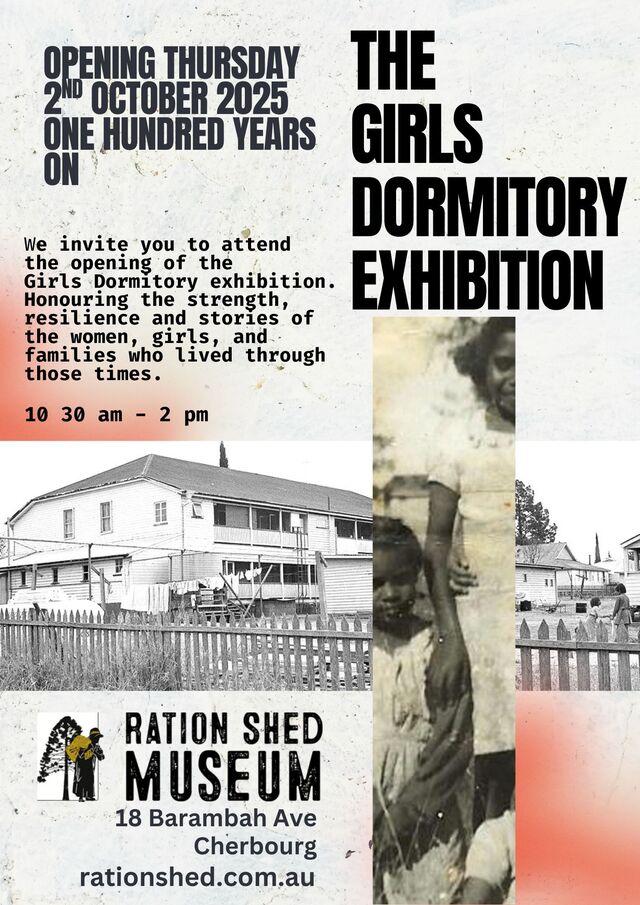
The Girls Dormitory Exhibition at the Cherbourg Ration Shed Museum opens on Thursday, 2 October, with an official launch event to be held at 10.30am.
The exhibition recognises the centenary of the opening of the second girls’ dormitory in Cherbourg – then Barambah Aboriginal Settlement – by the Queensland Government in 1925.
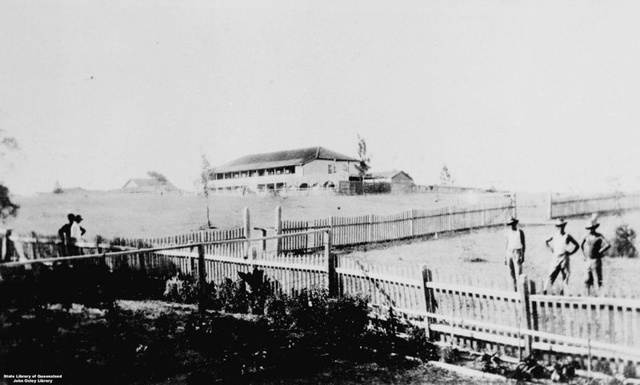
Around the turn of the 20th century the Salvation Army and later the state government detained hundreds of forcibly removed First Nations Australians at Cherbourg, building a boys’ and girls’ dormitory in 1909 and 1910 respectively to house the younger inmates of the settlement.
Due to overcrowding and poor living conditions the government built an additional girls’ and boys’ home at Cherbourg in 1925 and 1928, respectively.
The boys’ dormitory nowadays forms part of Cherbourg’s Ration Shed Museum and will play host to the October exhibition; the girls’ housing unit burnt down in 1997 almost two decades after its closure, with Cherbourg having gained independence in the interim.
The Ration Shed Museum described the girls’ dormitory as a “place of profound and often painful experiences” for its multiple generations of inmates, saying those living at the facility endured surveillance and frequent punishments all while being unable to see their families living in other parts of the settlement at will.
“Their [inmates’] daily lives were regimented, with minimal schooling and long hours of domestic labour,” a synopsis of the girls’ dormitory compiled by the Ration Shed Museum reads.
“They scrubbed floors, cooked, cleaned, and sewed garments on an industrial scale. Above all they were removed with shreds of family ties littering the permit lines.”
The community of Cherbourg hopes to reclaim its painful history of government oppression through the new exhibition, which promises to display first-hand accounts from inmates as well as photographs and artifacts from the town’s settlement days on a permanent basis.
A morning tea will follow the exhibition’s official launch on 2 October.