CONTENT WARNING: This story features descriptions of child abuse and photos of people who have died. Reader discretion is advised.
For the majority of the 20th century the female inmates of the Cherbourg Aboriginal settlement had their lives dominated by the rules of the girls’ dormitory and its overseers.
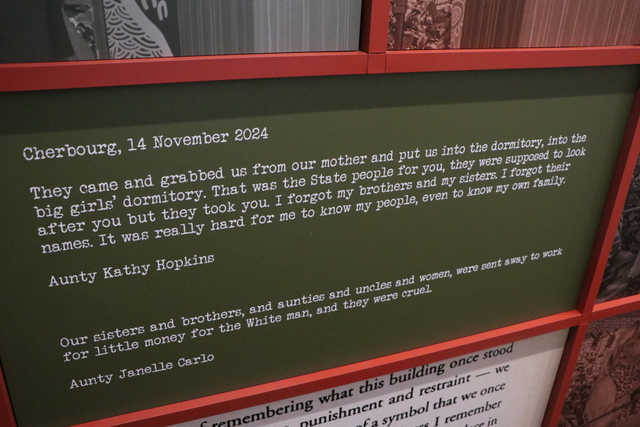
A new permanent exhibition at the town’s Ration Shed Museum, informed by the living testimony of some of the ‘Domo’s’ survivors, has laid bare decades of institutional violence at the hands of the Queensland government.
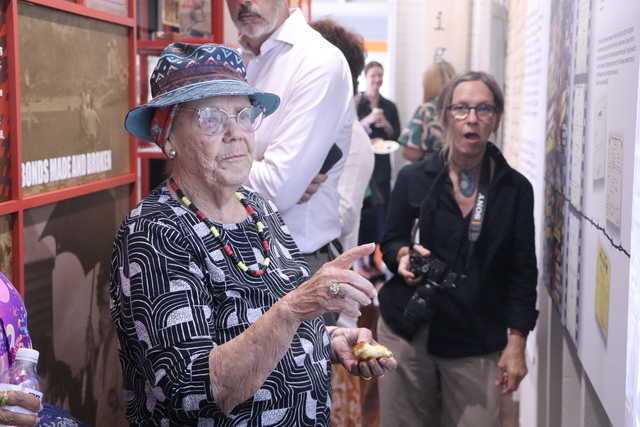
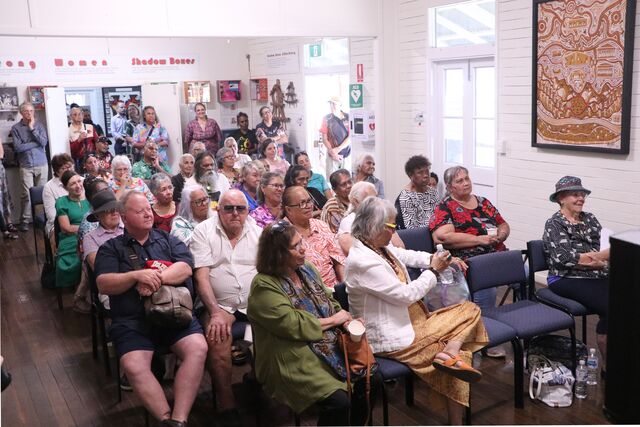
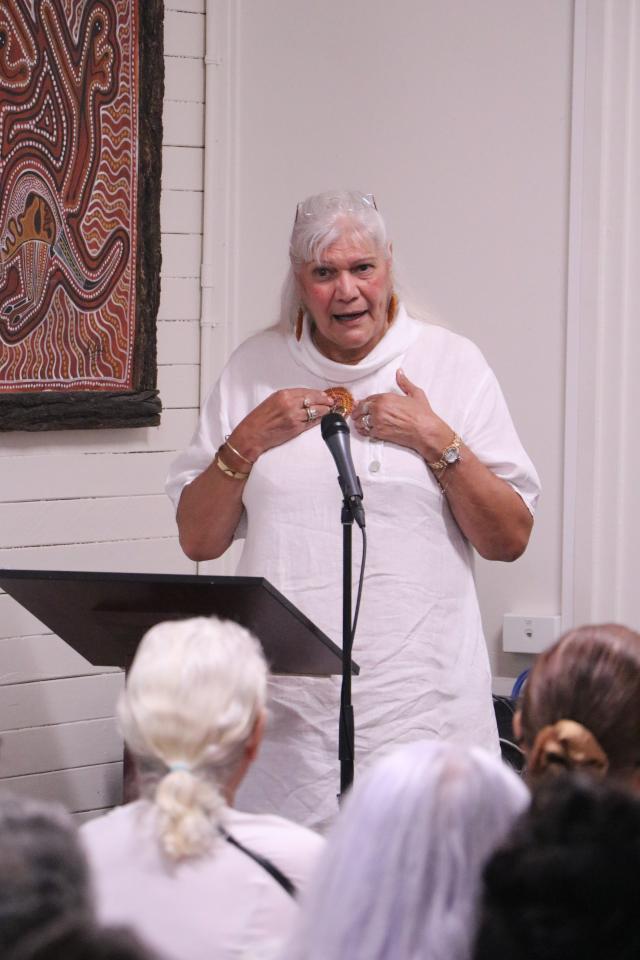
‘Domo girls’, Cherbourg elders, researchers and politicians gathered at the Ration Shed Museum on 2 October to witness the opening of The Girls’ Dormitory Exhibition.
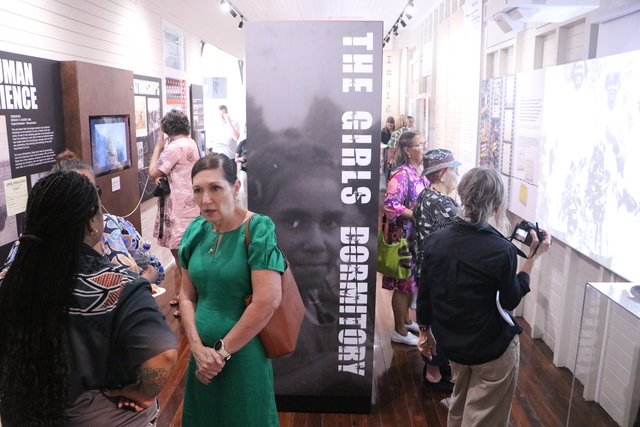
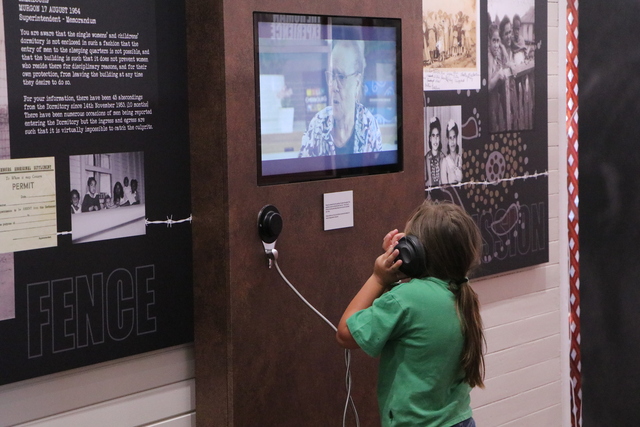
The new exhibition features a range of historical photographs and documents, artifacts donated by former inmates, and audiovisual components like recorded interviews and slideshows – all assembled with the input of surviving ‘Domo girls’ who helped to provide testimonies and guidance.
The resulting display forms a comprehensive picture of life in the girls’ dormitory complete with lists of former inmates, descriptions of institutional oversight and vignettes of yesteryear; a section of the exhibition is dedicated to the girls’ outings to the local cinema, which served as one of their few means of escapism.
Ration Shed Museum manager Nicola Tizzard explained the displays had taken her and co-curator Matthew Wengert a year to put together, with the pair combing through the Queensland State Archives and the Queensland State Library catalogues to gather up the necessary materials.
“It’s come up really well,” Ms Tizzard said.
“When you take the time to read these texts they’re quite powerful.”
The exhibition’s 2 October opening featured speeches by ‘Domo’ survivors Dr Ruth Hegarty and Joanne Willmot, who travelled from South Australia to give her testimony.
Those assembled at the Ration Shed also heard from Cherbourg mayor Bruce Simpson, councillor Carla Fisher and Andrea Collins PSM, the daughter of the late Eva Collins who once served as a supervisor of the dormitory after having previously been an inmate herself.
Mr Simpson told the room that on 31 October, one year will have passed since the Queensland LNP ordered a stop to the state’s Truth-telling and Healing Inquiry.
Cherbourg’s mayor said exhibitions like that on the girls’ dormitory served as powerful truth-telling statements, promising that his council was still involved in exploring further pathways to record and broadcast the realities of life in the former Aboriginal mission.
State Labor politician Leeanne Enoch, who serves as shadow minister for Closing the Gap and reconciliation, attended the opening snubbed by Nanango MP Deb Frecklington and minister for Aboriginal and Torres Strait Islander Partnerships Fiona Simpson.
“This is another exercise in truth-telling,” Ms Enoch said.
“When you hear stories directly from the people who have experienced it, who have lived it, and who have then lived with the repercussions of it, that is quite powerful.
“I think it’s more important than ever that we support exhibitions like this, to try and find ways to tell the truth given that the LNP government are not interested in any kind of formal mechanism to do that,” the opposition MP said.
The launch of The Girls’ Dormitory Exhibition comes on the centenary of the opening of Cherbourg’s second female lodging house, built in 1925 to address overcrowding in the initial structure constructed 15 years prior. The dormitory burnt down in 1997 after it had stood unoccupied for around two decades.