WARNING: Aboriginal and Torres Strait Islander readers are advised this story features the names and pictures of people who have died.
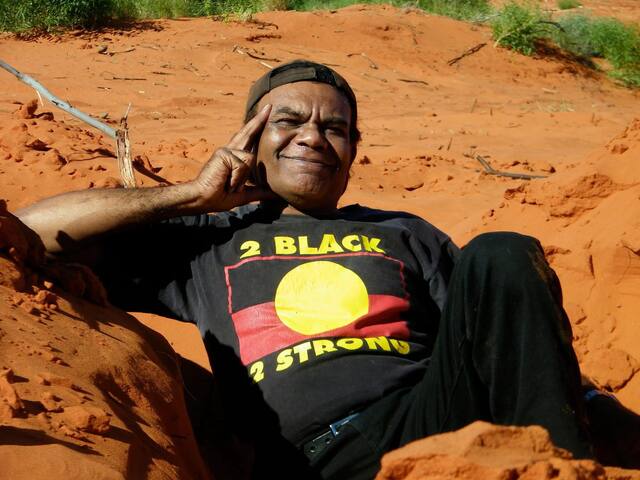
Legendary Indigenous poet and activist Lionel Fogarty has died after a short battle with cancer, aged 68.
Mr Fogarty, a Mununjali man of the Yugambeh people, was born on 25 December 1957 at Barambah Aboriginal Settlement, now known as Cherbourg.
Throughout his life, Mr Fogarty was a vocal advocate for Indigenous land rights and spoke about the issue of Aboriginal deaths in custody – the latter of which he redoubled his efforts in after his brother, Daniel Yock, died in the back of a police van in 1993 aged just 18.
In 1974, Mr Fogarty alongside Denis Walker and Juan Jose Garcia was arrested by the Bjelke-Petersen Queensland government’s ‘Special Branch’ on charges of of intention to extort and kidnap the president of the University of Queensland’s student union, James Varghese.
The arrest of the ‘Brisbane Three’ triggered nationwide outrage; charges on the trio were dropped in 1975.
Mr Fogarty published Kargun, the first of his 14 volumes of poetry, in 1980. His final book, Harvest Lingo (2022) won the Queensland Literary Award in 2023 and was also shortlisted for the Prime Minister’s Literary Award in poetry.
In 2025, Mr Fogarty received the Red Ochre Award for Lifetime Achievement in Artistic Excellence.
He was also a prolific painter, often pairing his visual art with his poetry.
Mr Fogarty’s life and activism have been the subject of numerous academic works; a documentary on the renowned artist and advocate has been in development for the past several years.
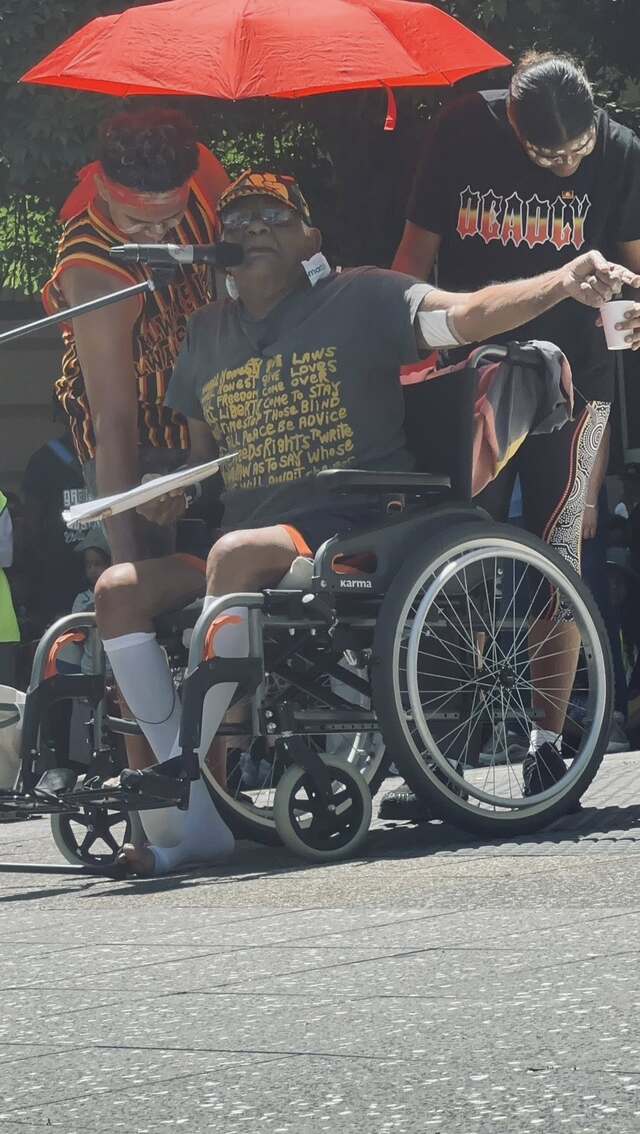
On 26 January 2026, Mr Fogarty, then already in declining health, made a brief appearance at Brisbane’s Invasion Day march to urge Australia’s Indigenous people to carry on their fight for self-determination.
For the last years of his life, Mr Fogarty lived on Country in the Beaudesert area.
According to his son Kargun, he died in his sleep at Logan Hospital on 12 February 2026 following a brief but fierce battle with cancer.
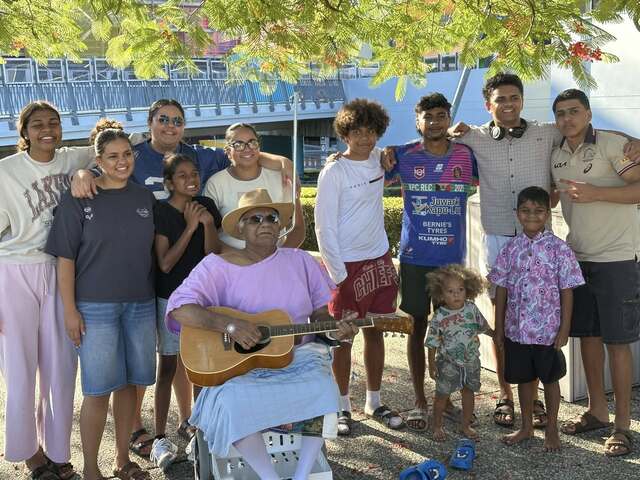
Lionel Fogarty leaves behind numerous children and grandchildren living throughout Australia, many of whom carry on his legacy of working to improve Indigenous rights in a variety of sectors.
Mr Fogarty’s family plans to hold a memorial service at his birthplace of Cherbourg on 6 March, followed by a funeral on Yugambeh country.
“Try to be strong for yourselves,” Mr Fogarty said from his hospital bed in Logan the week before his passing.
“You can grieve when the funeral happens, then go on to live your own lives.”